Саркози и российская демография…

ывший французский президент Николя Саркози в четверг выступил в Нью-Йорке, впервые с тех пор, как пять месяцев назад оставил Елисейский дворец. Николя Саркози выступил на закрытой для прессы частной конференции, организованной бразильским инвестиционным банком BTG Pactual, в Waldorf Astoria, роскошном отеле на Манхэттене. Сайт French Morning с большим юмором излагает основную часть его выступления, поскольку уточняя, что: «Выставляя свою новую трехдневную щетину, Николя Саркози выглядел «несколько натянутым» в начале своего выступления, как свидетельствует один из присутствующих. По словам источника, близкого к организаторам, гонорар, который он получил, составляет около 120.000 долларов, сумму, намного меньшую 250.000, которые требует Билл Клинтон, но «очень достойную, учитывая, что он не говорит по-английски», уточняет тот же источник».Я призываю моих читателей прочитать текст выступления бывшего президента и ознакомиться с его видением Европы, включающей Турцию, Саркози заявляет, что предпочитает Бразилию и Норвегию. Что же касается России, то бывший французский президент видит ее в расширенной Европе вместе с Турцией. Анатолий Карлин и Грег Вилли обратили мое внимание на эту удивительнуюфразу бывшего президента Франции: «Россия является глубоко европейской страной. Россия ― это страна, которая в два с половиной раза больше США, площадь которой в 46 раз больше площади Франции, и которая ежегодно теряет почти полмиллиона человек». Continue reading

Sarkozy et la demographie russe…

L’ancien président français Nicolas Sarkozy  a jeudi dernier fait son premier discours a New York depuis qu’il a quitté l’Élisée il y a cinq mois. Nicolas Sarkozy était l’orateur d’une conférence privée, fermée à la presse, organisée par la banque d’investissement brésilienne BTG Pactual, au Waldorf Astoria, luxueux hôtel de Manhattan. Le site French Morning a retranscris le gros de son intervention, avec beaucoup d’humour,  puisque précisant que: “Arborant sa nouvelle barbe de 3 jours, Nicolas Sarkozy semblait “un peu tendu” au début de son allocution témoigne un des convives du déjeuner. Selon une source proche des organisateurs, le cachet qu’il a touché avoisinerait les 120.000 dollars, une somme très inférieure aux 250.000 qu’exige Bill Clinton “mais très respectable compte-tenu qu’il ne parle pas anglais”, précise cette même source.

J’incite mes lecteurs a lire ce texte de l’ex président et sa vision d’une Europe incluant désormais la Turquie et qui déclare préférer le Brésil et la Norvège. Quand a la Russie, que le président français imagine dans une Europe élargie avec la Turquie, Anatoly Karlin et Graig Willy m’ont fait remarqué cette phrase assez surprenante de l’ex président Français.”La Russie est profondément un pays européen. La Russie, c’est un pays qui est grand comme deux fois et demi les États-Unis d’Amérique, dont la superficie est 46 fois la superficie de la France, et qui perd près d’un demi-million d’habitants chaque année“.

La dernière fois que la Russie a perdu 500.000 habitants en une année c’était en 2006. Observons depuis les tendances démographiques naturelles hors immigration. J’y ajoute en rouge ma prévision pour l’année en cours, sachant que sur les 8 premiers mois de l’année 2012 la population n’a baissé “que” de 20.000 habitants.

2007           1.610.100        2.080.400         -470.300
2008           1.717.500        2.081.000         -363.500
2009           1.764.000        2.010.500         -246.500
2010           1.789.600        2.031.000         -241.400
2011           1.793.828        1.925.036        -131.208

2012           1.820.000(?)   1.880.000 (?)    – 70.000

Si on regarde la population russe en prenant en compte l’apport migratoire, la population russe est stable depuis 2003 ! 🙂
143,114,000 au 1ier janvier 2003 et  143,141,953 au 1ier janvier 2012.

Почему Владимир Путин?

L’article original a été publié sur RIA-Novosti
*
Недавно моя мама встретила свою знакомую в сырном отделе супермаркета в столице, где они обе проживают. Эта знакомая – шестидесятилетняя француженка, католичка, принадлежащая к высокому социальному слою. Она много путешествовала, особенно в Европе, и является человеком, готовым к восприятию нового. Итак, встретившись с моей мамой, она спросила следующее: «Не слишком ли тяжело вашему сыну в России с Путиным?»Путин в минувшее воскресенье отметил свое 60-летие. Шестьдесят лет ― это всего лишь на два года старше, чем Франсуа Олланд или Франсуа Фийон, и на три года старше, чем Николя Саркози. Для европейских политиков это приемлемо. Однако у Владимира Путина за плечами впечатляющая политическая карьера: два президентских мандата и один срок на посту премьер-министра, то есть уже 12 лет во главе крупнейшей страны мира, шестой по величине экономики планеты.

Pourquoi Vladimir Poutine?

L’article original a ete publié sur le site de RIA-Novosti
*

Récemment ma mère a croisé une de ses amies dans le rayon fromage du supermarché de la capitale dans laquelle elles résident toutes les deux.   Cette amie est une française d’environ soixante ans, catholique et d’un bon niveau social. Elle a beaucoup voyagé, surtout en Europe et c’est une personne plutôt ouverte d’esprit. Celle-ci donc, croisant ma mère, lui demanda la chose suivante: “ce n’est pas trop dur pour ton fils en Russie avec Poutine”?

 
L’homme vient justement de fêter ses 60 ans dimanche dernier. Soixante ans c’est seulement deux ans de plus que François Hollande ou François Fillon, et 3 ans de plus que Nicolas Sarkozy. Pour un homme politique européen c’est convenable. Pourtant Vladimir Poutine a déjà derrière lui une carrière politique impressionnante: deux mandats de président et un de premier ministre, soit déjà 12 ans à la tête du plus vaste pays du monde, désormais sixième économie de la planète. Continue reading

L’Union eurasiatique entre deux mondes

L’article original a ete publié sur le site de RIA-Novosti
*

Plusieurs événements récents, passés relativement inaperçus pourraient pourtant avoir des conséquences importantes pour l’avenir du continent européen. Le premier est la décision politique de la Bulgarie  de renoncerà poursuivre les négociations d’entrée dans l’Euro. Le plus pauvre despays de l’UE a pourtant enregistré une croissance positive en 2011 (1,7%) et sa croissance devrait être sensiblement équivalente en 2012également. Comme le ministre des finances bulgare l’a clairement résumé:

“Je ne vois actuellement aucun bénéfice à entrer dans la zone euro, seulement des coûts (…) C’est trop risqué pour nous et il n’est pas évident de savoir quelles sont les règles et ce qu’elles seront dans un an ou deux“.
Même tonalité dans les propos récents du ministre des finances polonais qui semble renvoyer à plus tard la perspective d’une entrée dans la zone euro en affirmant que: “Je n’aimerais pas emménager dans une maison où des éléments architecturaux, c’est-à-dire des éléments essentiels de la rénovation, n’ont pas été réalisés ; où le danger existe qu’un mur nous tombe dessus“. Dans le Nord de l’Europe, la Lettonie et la Lituanie ont également sensiblement différé leurs calendriers d’adhésion à la monnaie unique, ce qui traduit bien leur inquiétude face à la crise que connait l’UE.

Евразийский союз между двух миров

Оригинальная статья была опубликована в РИА Новости
*
Несколько недавних событий, оставшихся относительно незамеченными, могут иметь значительные последствия для будущего европейского континента. Первое ― это политическое решение Болгарии отказаться от продолжения переговоров по вступлению в зону евро. Самая бедная страна в ЕС имела, однако, положительные темпы экономического роста в  2011 году (1,7%) и в 2012 году ее рост должен сохраниться. Как четко сформулировал болгарский министр финансов: «В настоящее время я не вижу никаких преимуществ от присоединения к зоне евро, только    издержки (…) Это для нас слишком рискованно, и пока не ясно каковы правила и какими они станут через год или два».Та же тональность в недавних высказываниях польского министра финансов,
который, как кажется, отложил на более поздний срок перспективу вступления в зону евро, заявляя, что: «Я бы не хотел переехать в дом, где архитектурные части, то есть основные элементы конструкции, не были бы построены, где существует опасность, что на вас упадет стена». На севере Европе, Латвия и Литва также откладывают свои графики присоединения к единой валюте, что хорошо отражает их обеспокоенность по поводу кризиса в ЕС.


На Балканах, в Сербии недавнее исследование
подтвердило тенденции, возникшие во время последних президентских выборов. Патриотические и консервативные движения в случае досрочных выборов получили бы поддержку почти 62% избирателей, показатель, который ни разу не был достигнут со времен войны 1999 года и конца правления Слободана Милошевича. Continue reading

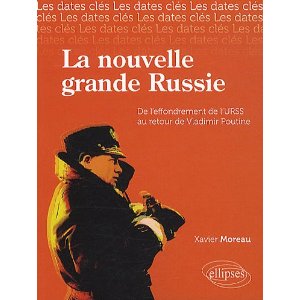
Putin’s new Russia (the book)

Press Release: the book “Putin’s New Russia” is available.
 
The  editors Jon Hellevig and Alexandre Latsa have brought in a host of contributors that have the independence and courage to speak out against the willful and malicious propaganda war against Russia in which the western media is an all too willing accomplice with its gross double standards, hypocrisy and venal  stupidity. Most of the contributors, a true “coalition of theттunwilling”, have experienced at firsthand the years of anarchy and the emergence of the normal country under Putin. They comprise mostly Western scholars, businessmen and analysts like: Eric Kraus, Patrick Armstrong, Jon Hellevig, Alexandre Latsa, Mark Chapman, Anatoly Karlin, Nils van der Vegte,
Aleksander Grishin, and Craig James Willy.
 
The book is published by American non-profit NGO “Kontinent USA” 1800 Connecticut Avenue, NW Washington, DC 20009 US-Russia.org
The book is now coming out in both print and as an e-book that You can download here.
A Russian version is due later in the fall.
 
*
 
For a reader of dominant western media all the received myths about Putin and Russia which the media has so deceitfully cultivated during the last ten years will be  thoroughly uprooted. The reader is offered a fresh and new view on virtually everything you may think you know about contemporary Russia: its political system, leaders, economy, population, so-called opposition, foreign policy and much more. It will emerge that much of it is either seriously flawed or just plain wrong. This has not happened by accident. This book explains why it happened. 
 
Putin’s New Russia not only provides a more balanced view of Russia’s post-Soviet history, but it also shames the vast majority of western journalists who have covered Russia over the past two decades, and the so-called “expert Russia watchers” employed by faux NGOs and think-thanks. These are two circles of people who reinforce the same tired and fundamentally flawed interpretation of just about everything related to Russia. Both claim to inform, but what they really do is to disinform the western public so as cast Putin and Russia in the image of an enemy with all the leeway it allows for furthering their geopolitical goals. The contributors to this book contest the
image presented by the mainstream press. The book exposes the bogus rhetoric of Western governments, their special purpose think-tanks and NGOs. It brings to light the misuse by them of such lofty terms as “democracy”, “human rights” and “civil society” as a front in the service of achieving geopolitical advantage.
Publications Details

First edition published 2012
Copyright Jon Hellevig and Alexander Latsa
kontinent@russiahouse.org
www.us-russia.org/kontinent

Cover by Alexandra Mozilova on motive of painting by Ilya Komov
Printed at Printing house “Citius”
ISBN 978-0-9883137-0-5
Price of printed book: 20 euros


Where to buy
The book is on sale at Kontinent USA office in Moscow, Arbat 15
The book can be ordered from the webstore Ruslania.com worldwide:
Make a search for the book ID 10002468
Tel +358 9 2727070
E-mail: Ruslania@ruslania.com

Link https://www.ruslania.com/context-321/entity-1/details-120041/language-1.html

The book can be ordered from this address: putinsnewrussia@gmail.com
Instructions will be sent by the return e-mail

Media Requests

Jon Hellevig – Mobile +7 495-5170969 – jon.krister.hellevig@gmail.com
Alexander Latsa – Mobile + 7 916-3747546 – alexandre.latsa@gmail.com

Edward Lozansky – Mobile +7 495-5097346 – lozansky@gmail.comLinks
www.us-russia.org/kontinent
www.hellevig.net
www.alexandrelatsa.ru

Демографические показатели августа 2012

Демографические показатели за первые 8 месяцев 2012 года доступны и подтверждают значительное улучшение ситуации в России.В августе 2012 был достигнут рекорд: 176.323 родившихся против 173.166 в августе 2011 года. Смертность вновь снизилась, 153.863 умерших против 162.424 в августе 2011 года.В августе 2012 года население России увеличилось на 22.460 человек.

Сейчас о первых 9 месяцах 2012 года. Родилось 1.253.011 человек против 1.170.966 за первые 9 месяцев 2011 года, то есть рост составил 7%!

Смертность также сокращается, 1.274.191 умерших против 1.299.820 за тот же период 2012 года, то есть снижение составило 2%.

В итоге, с 1.253.011 родившимися и 1.274.191 умершим с начала года, население России сократилось на 21.180 человек, против сокращения на 128.854 человека за тот же период 2011 года.

Le point démographique de Aout 2012


Les résultats démographiques pour les 9 premiers mois de 2012 sont disponibles et confirment la forte amélioration de  la situation en Russie.

Aout 2012 a vu un record de 176.323 naissances contre 173.166 en aout 2011.
La mortalité est elle de nouveau en baisse, avec 153.863 décès contre 162.424 en aout 2011.
En aout 2012 la population russe a donc augmenté de  22.460 citoyens 🙂

Maintenant sur les 9 premiers mois de l’année 2012 il y a eu 1.253.011 naissances contre 1.170.966 sur les 9 premiers mois de 2011, soit une hausse de 7%!
La mortalité est elle en baisse également, avec 1.274.191 décès contre 1.299.820 sur la même période en 2012, soit une baisse de 2%.

Résultat des courses, avec 1.253.011 naissances et 1.274.191 décès depuis le début de l’année, la population russe a baissé de 21.180 habitants, contre une baisse de 128.854 habitant sur la même période en 2011.

Russian’s returning home?

I have been working in the HR Field for more than 12 years, and 5 years in russia, and I meet (mostly since 2 years) more and more russians coming back from the west, especially from France (I am mostly  working with French companies looking for French speaking candidates, most of them have spent some times in France).The main state organization dealing with unemployment in France predicts 235.000 more unemployed people in France in 2012. The figure should be 500.000 more from June 2012 to June 2013 says the famous French economist Jacques Sapir.
So this move of Russians coming back from France to Russia should continue, and even increase. But since the situation is getting worse in France, a new trend is developing and yet I meet more and more French families coming to Russia, because one of the two members of the family has found a Job in Russia, and they want more than everything  escape from a totally economically closed situation, when its non from a systemic closed situation. More and more often, those new French migrants even put their French and non speaking kids in russians public school, because they are less expensive this is not the only reason. I think what we begin to see is a new migration, a long term one. People leave the West (?) and move east, in Russia, because the country has got an economic growth and is showing its ability to face the future with a strong human, economical and moral potential.
Around me, I know more and more French Citizens who are even thinking torenounce their French citizenship in order to become Russian. They are mostly in their mid 30ies, married, with russians citizens, they have been living in russia for more than 5 years and they are very mad at and fed up with the situation in France, which I can by the way totally understand…Let’s see where it goes… You can read more about this topic here Continue reading